Love letter to Crete
The first time I was told I would be visiting Crete as part of a work trip, I did not think much of it. In fact, I must admit that I barely knew where it was. I remember opening a map, zooming into the Mediterranean, and discovering this long island stretching across the sea, disconnected from mainland Greece.
Three years and many visits later, I would be lying if I said I am not constantly planning my next trip back to Crete. If circumstances ever allowed it, I think I would happily move there.
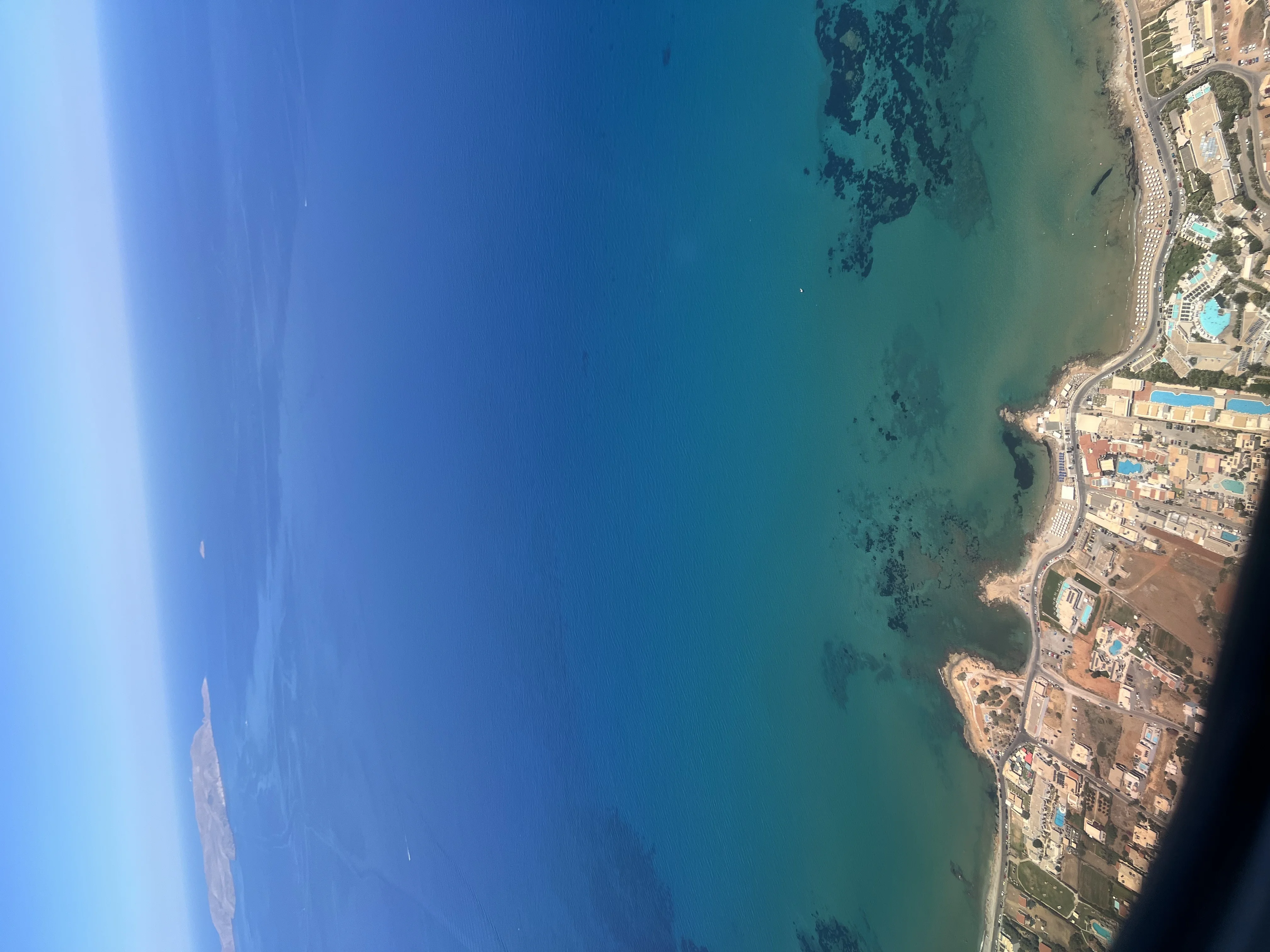
My first journey to the island was a simple flight: a Transavia plane from Paris to Heraklion. Yet the moment the island appeared beneath the window, something shifted. The coastline looked unreal, jagged cliffs dropping into impossibly clear water, the sea shifting between shades of turquoise, cobalt, and deep blue. I had never seen a coastline quite like it.
Landing in Heraklion was its own small moment of magic. The runway sits so close to the sea that it almost feels as if the plane is skimming the water before touching down. For a few seconds, the Mediterranean fills the entire window, waves breaking along the shore as if the island itself is welcoming you.
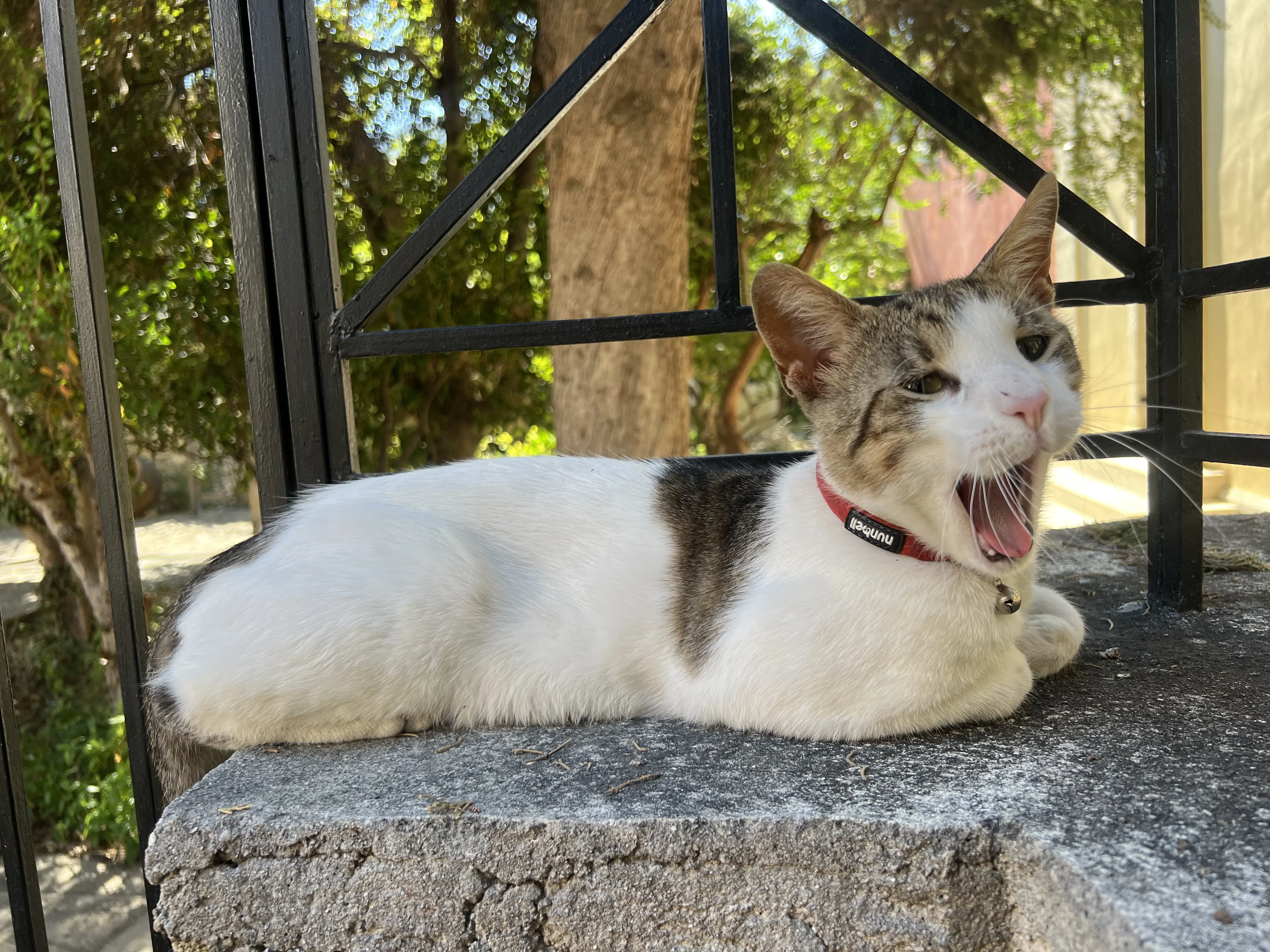
Crete, I quickly realized, is not just another Mediterranean destination. It is an island with an enormous personality, wild landscapes, ancient history, tiny harbor towns, long meals that stretch into the night, and a warmth in its culture that makes visitors feel less like tourists and more like returning friends.
And the more time I spent there, the more the island revealed itself.
Heraklion was my first real introduction to Crete. At first glance it feels like a busy Mediterranean city. But walk its streets for an hour, and the layers begin to peel back. The harbor is one of the first places that captures your attention. At its edge stands the Venetian fortress, weathered by centuries, and beyond it, a lighthouse keeping silent vigil over the sea. By evening, the water turns molten gold, and the entire basin glows. I lost count of how many sunsets I spent there, coffee in hand, watching ferries glide in and out like characters in a timeless play.
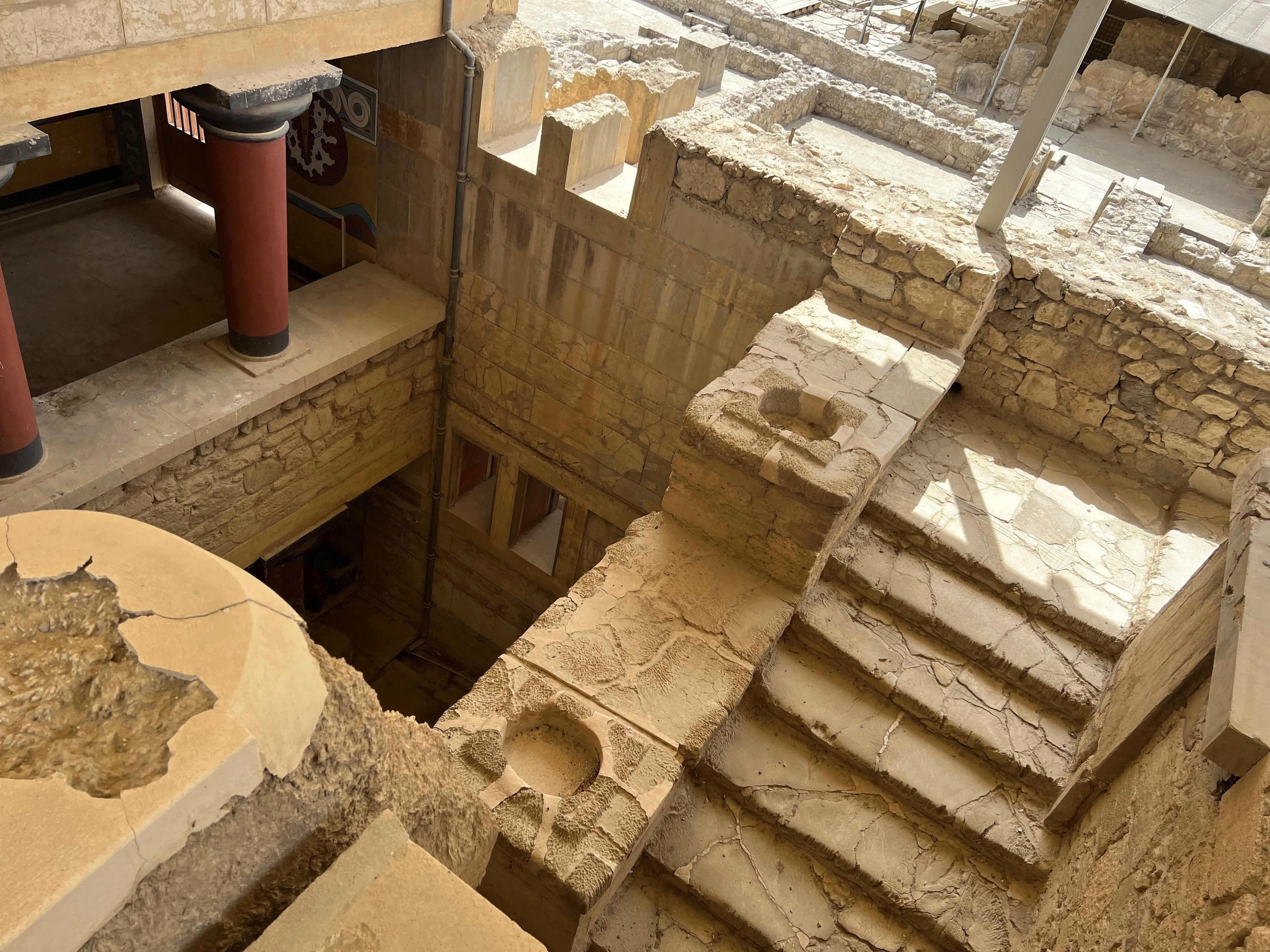
Not far from the city lies one of the most fascinating places in all of Crete: the palace of Knossos. Walking through the ruins feels almost surreal. This was once the center of the Minoan civilization, one of the oldest advanced societies in Europe. The columns, frescoes, and maze-like layout make it easy to imagine how stories of labyrinths and myths might have been born here.
Back in the city, I loved wandering the streets without any particular destination. Heraklion has this wonderful quality where almost every corner seems to reveal a piece of the past: an old stone archway, a Venetian fountain, or a church tucked between modern buildings. It feels as if the city is constantly reminding you that it has lived many lives.
I think one of my first real introductions to the people and the culture came through the receptionist at the hotel where I was staying. The first few days I was still very new and busy with work. My routine was simple: rush out early to the institute, come back late and tired, rest for a bit, and then head out again for dinner.
On the third evening he stopped me as I was heading back in and said something that stayed with me. “I see you every day rushing out and coming back. Relax. You are in Crete. Have some coffee, it’s free. Just sit, walk around, and eat at a taverna.” I remember being struck by how relaxed and composed he seemed. And that moment changed something. That was the first time I slowed down enough to really notice the place around me.
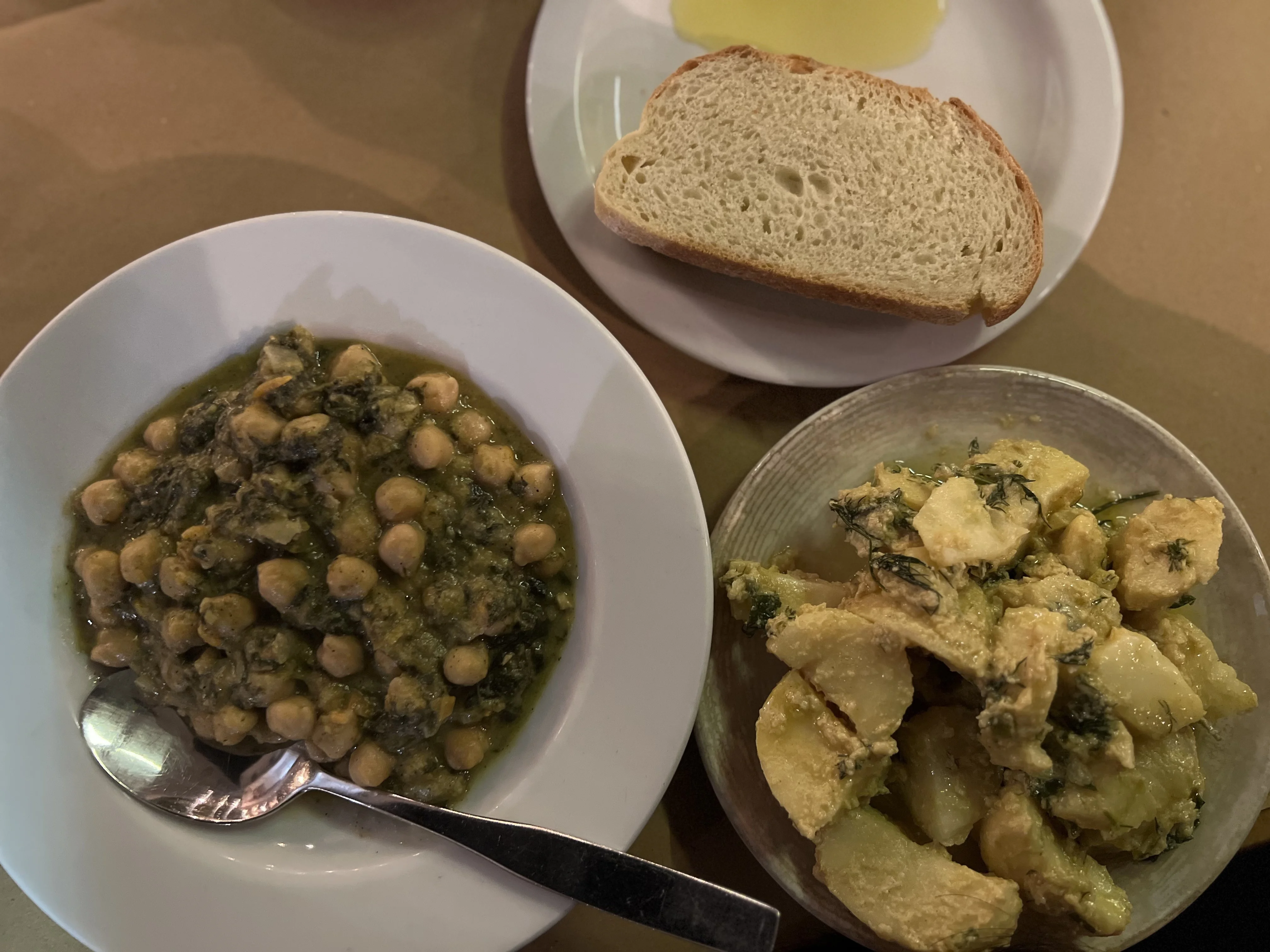
As a vegetarian, I’d braced for limited options. Instead, I found a culinary revelation. Cretan cuisine offers a wealth of vegetarian options, each meal feeling like a celebration of fresh, local ingredients:
- Dakos: Toasted barley rusks topped with juicy tomatoes, tangy mizithra cheese, and a drizzle of golden olive oil.
- Gemista: Tomatoes and peppers stuffed with herbed rice, slow-baked until tender.
- Wild greens foraged from the hillsides, sautéed in olive oil with garlic and lemon.
And that’s just the beginning. I’m not exaggerating, every dish was glorious, scrumptious, and perfectly balanced: healthy, hearty, and utterly delicious. What made the experience even more memorable was the hospitality. Almost every meal ended the same way: with a complimentary dessert and a small glass of homemade raki brought to the table. Sometimes it was slices of fresh fruit, sometimes a syrup-soaked pastry or creamy yogurt with honey. The raki, clear, strong, and unmistakably local, was offered with a smile, a quiet tradition that made every meal feel like a small celebration.
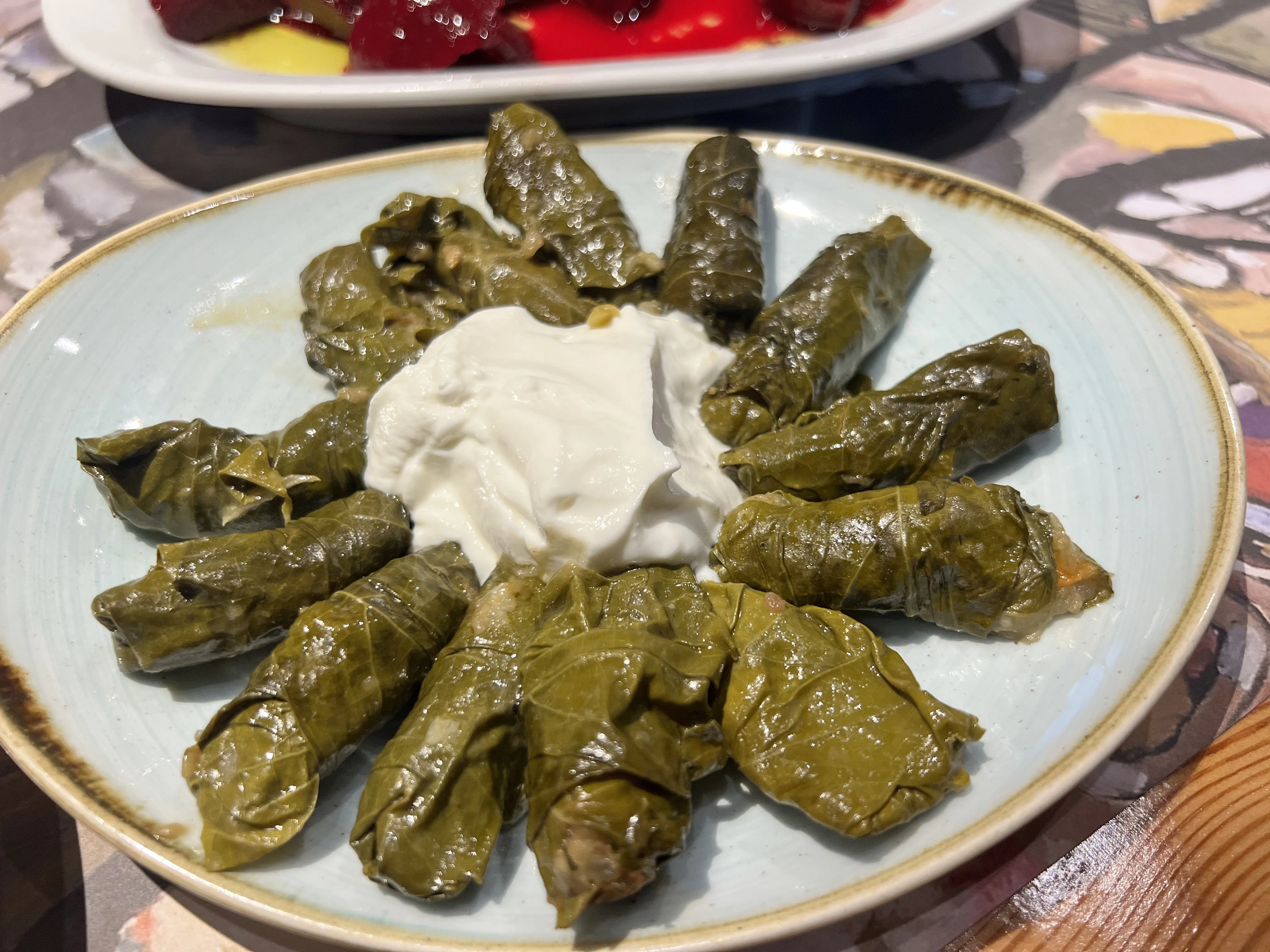
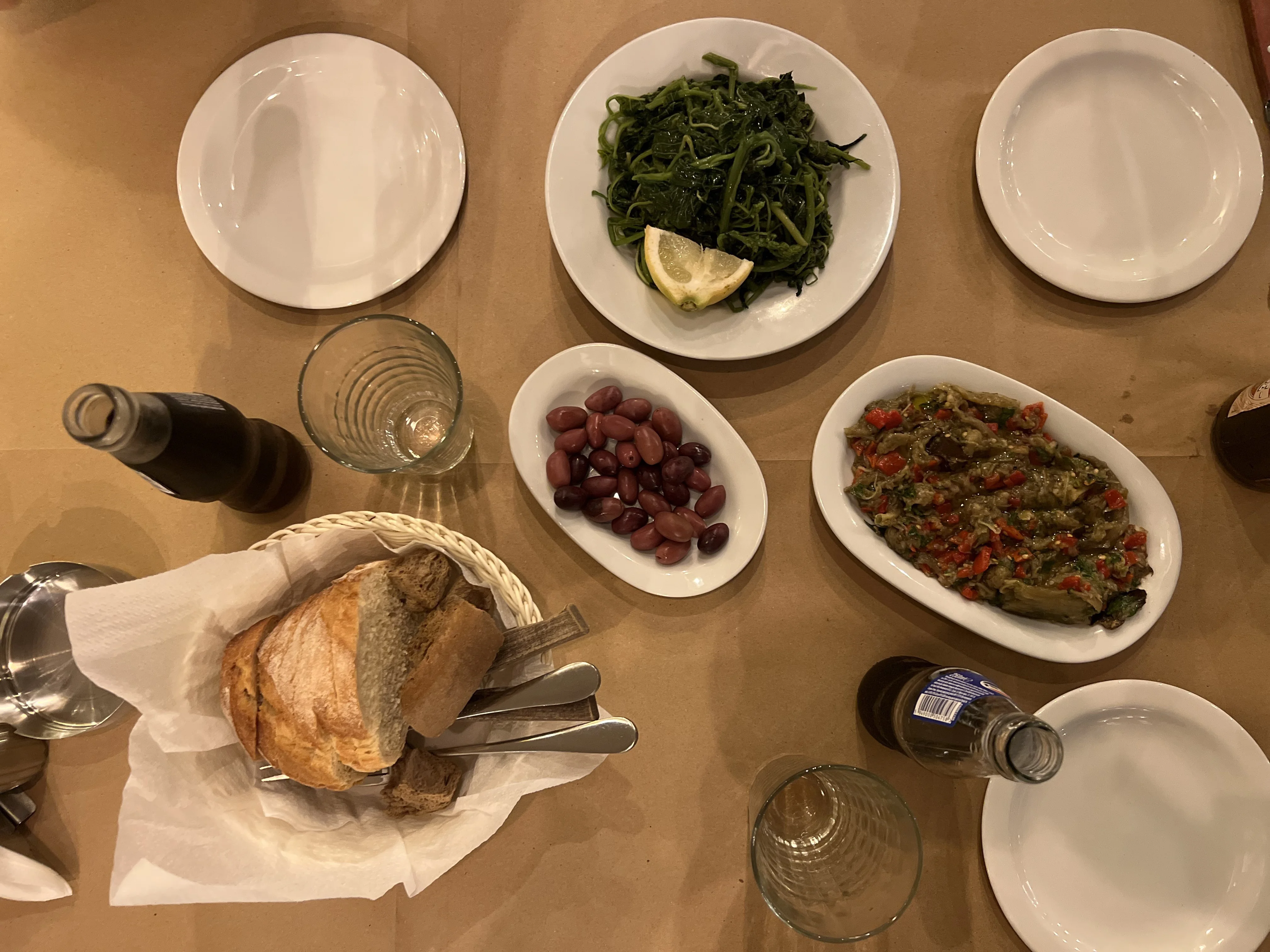
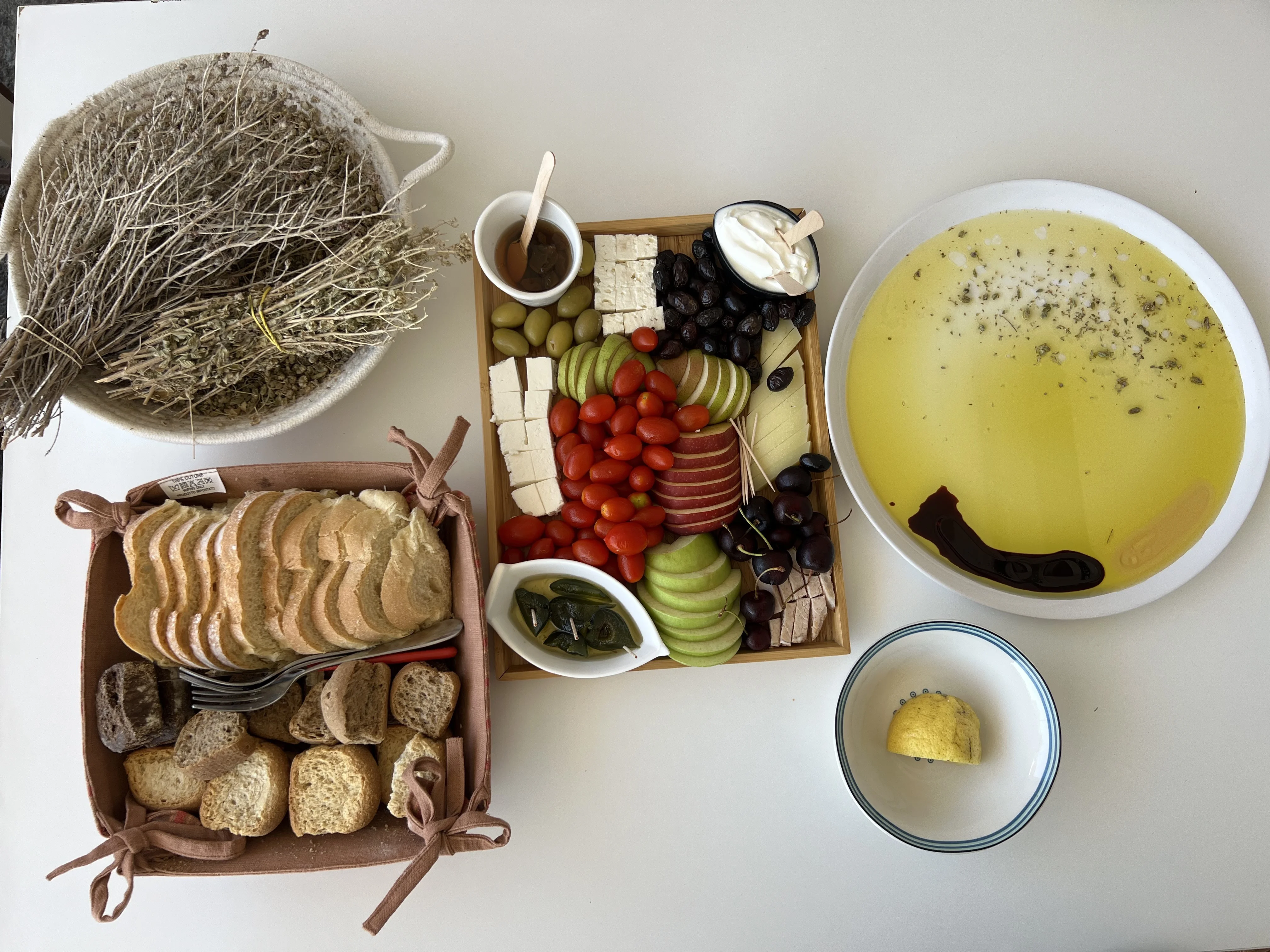
Heraklion ended up being much more than just the place where I landed. It was my first glimpse into the rhythm of the island, where ancient history, everyday life, and good food coexist so naturally that you almost forget how extraordinary it all is.
I got the chance to explore much more of Crete on my subsequent visits. On one of my next trips I stayed in Chania. And I am sure anyone who has been there would agree with me when I say: it is one of the prettiest towns to have ever visited.
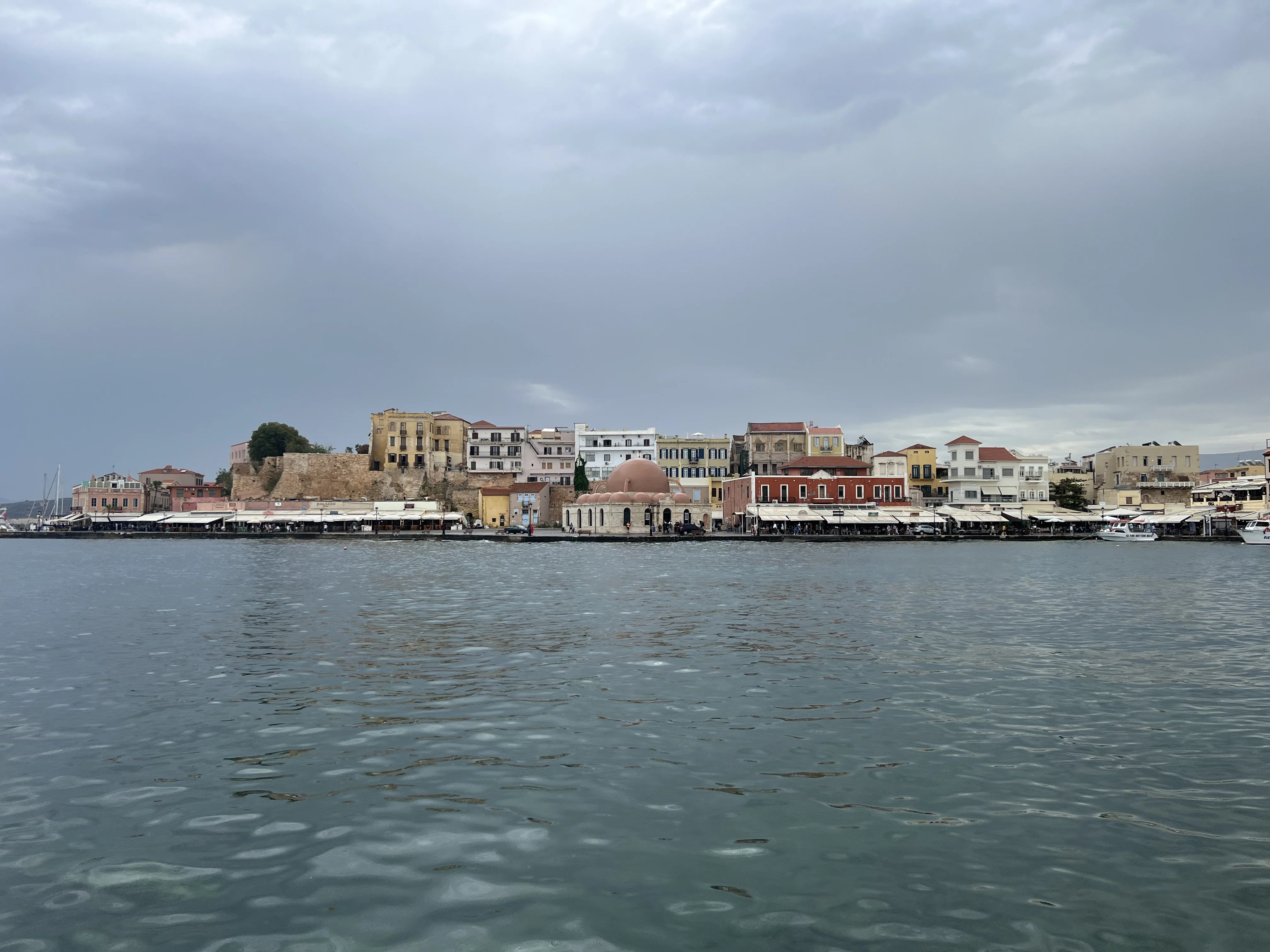
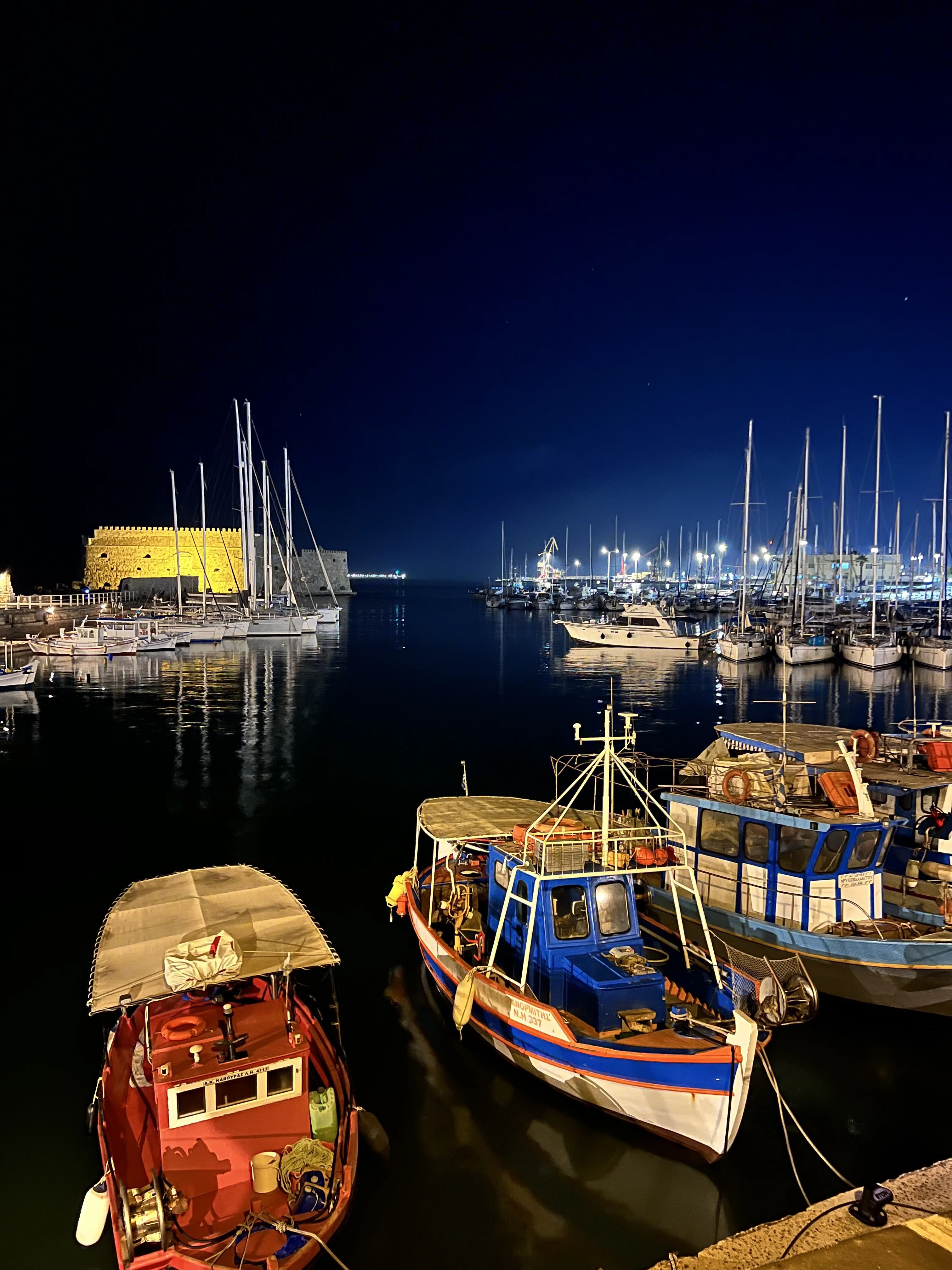
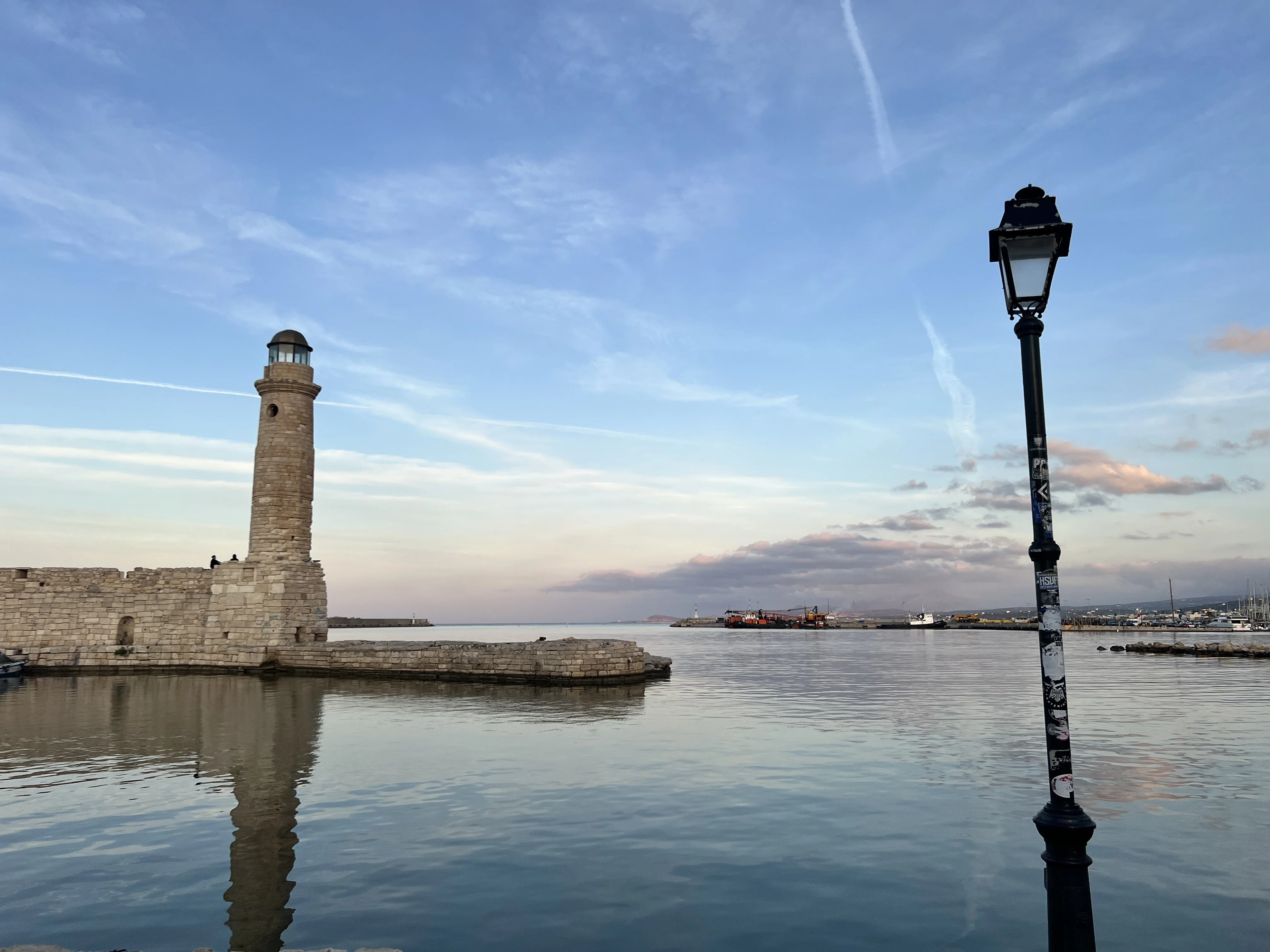
Chania feels like the romantic heart of Crete. Its Venetian harbor looks almost theatrical at sunset, when the pastel buildings glow in the last light and the old lighthouse stands quietly at the edge of the sea. I spent hours simply wandering through the narrow streets, where bougainvillea spill from balconies and tiny shops hide between old stone archways.
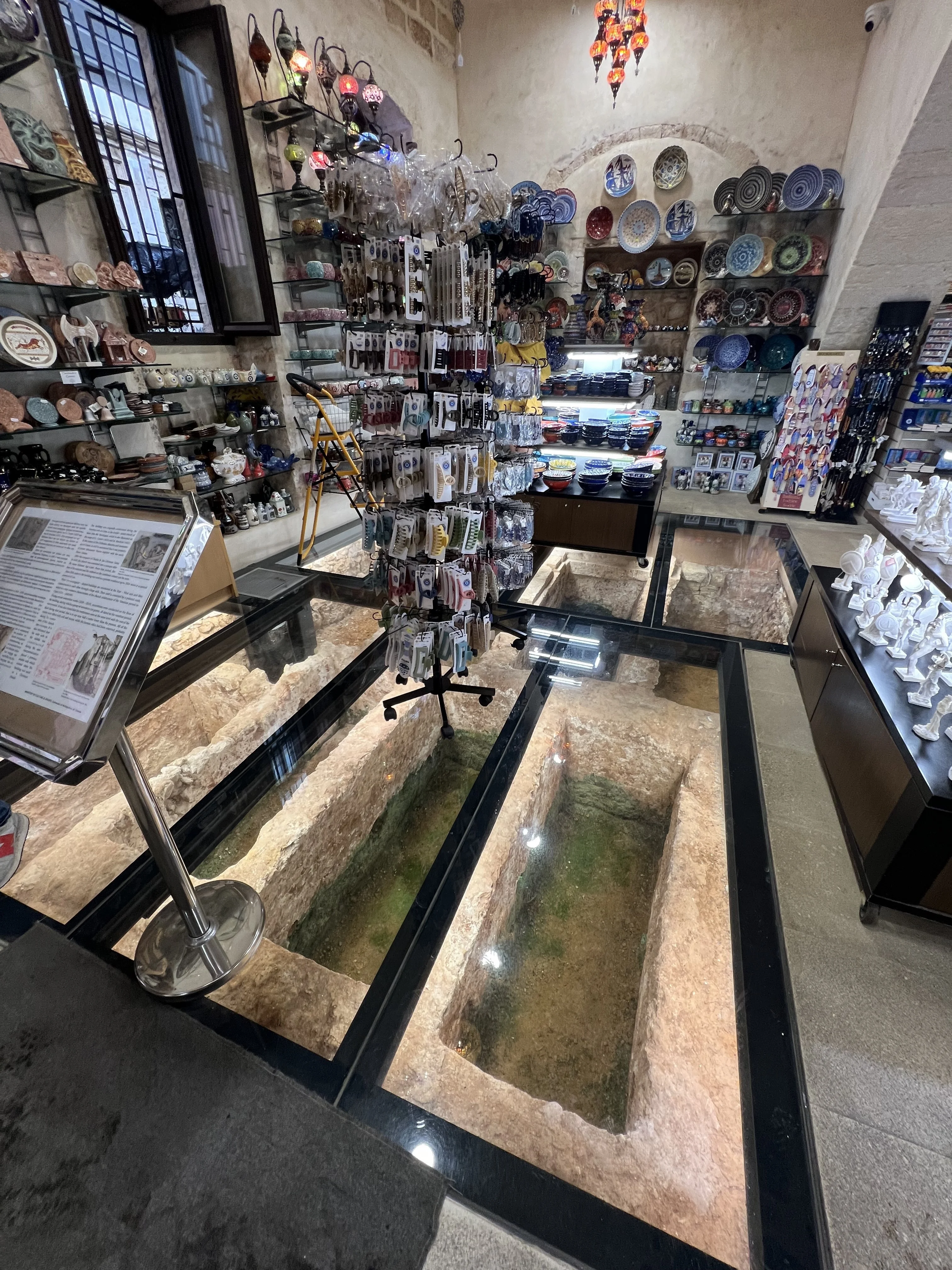
One of my favorite memories from Chania happened quite unexpectedly. I walked into a random souvenir shop and noticed that part of the floor was made of glass. Beneath my feet lay ancient stone ruins, preserved where they’d been unearthed. It felt oddly poetic to be standing there, browsing through small souvenirs while literally looking down at pieces of history preserved beneath my feet.
While in Chania, I took a trip to Elafonissi,the famous pink sand beach that seems to appear on almost every list of beautiful places in Greece. I had seen photos before, but seeing it in person was something else. The drive itself was beautiful, winding through the mountains and small villages before suddenly opening up to the sea. And then the beach appears shallow, clear water stretching out in soft shades of blue and turquoise. In some places the sand carries a faint pink hue, created by tiny fragments of crushed shells mixed into the white sand. You can walk far into the water, with the sea barely reaching your knees. It felt less like standing by the ocean and more like wandering through it.
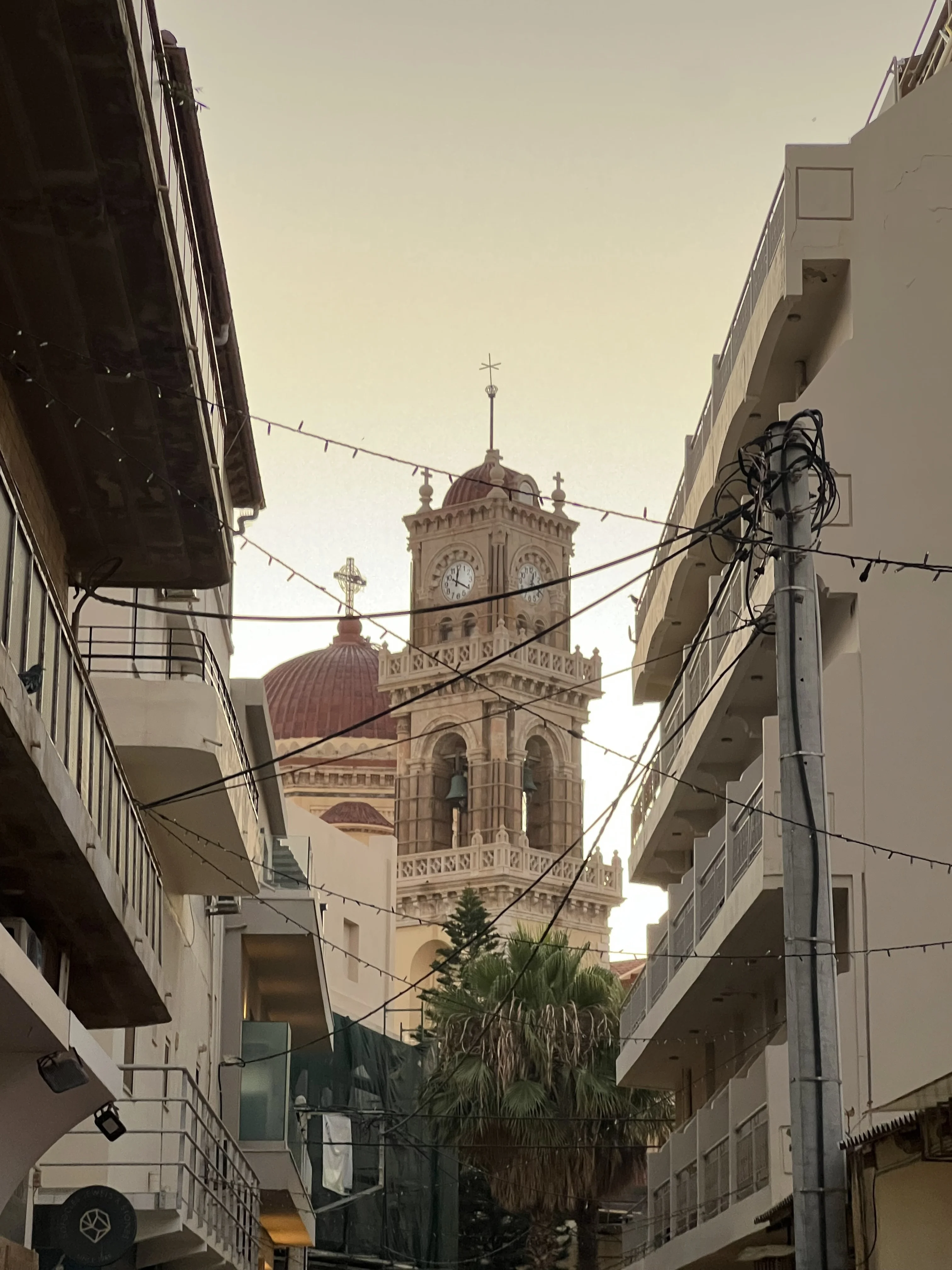
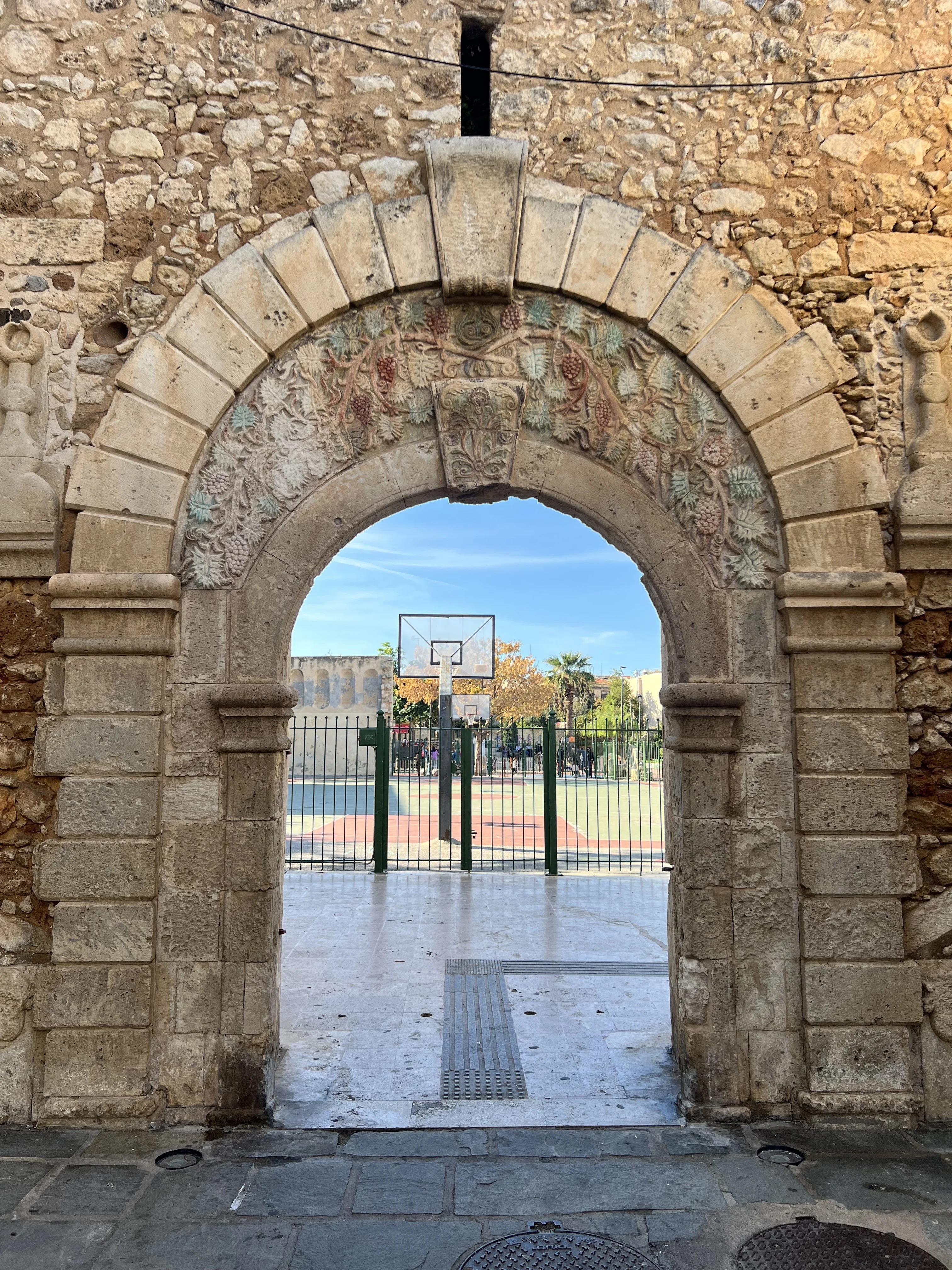
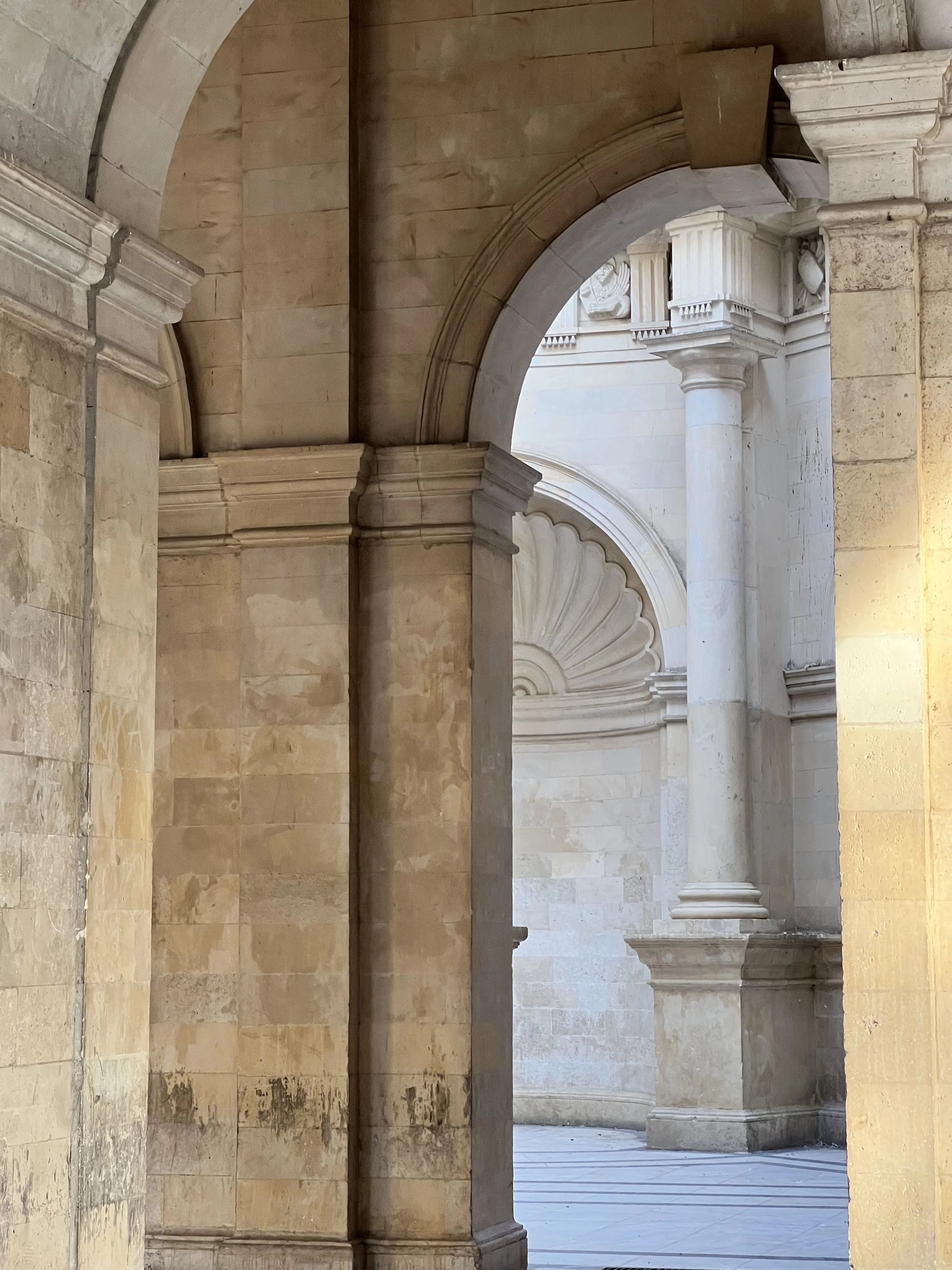
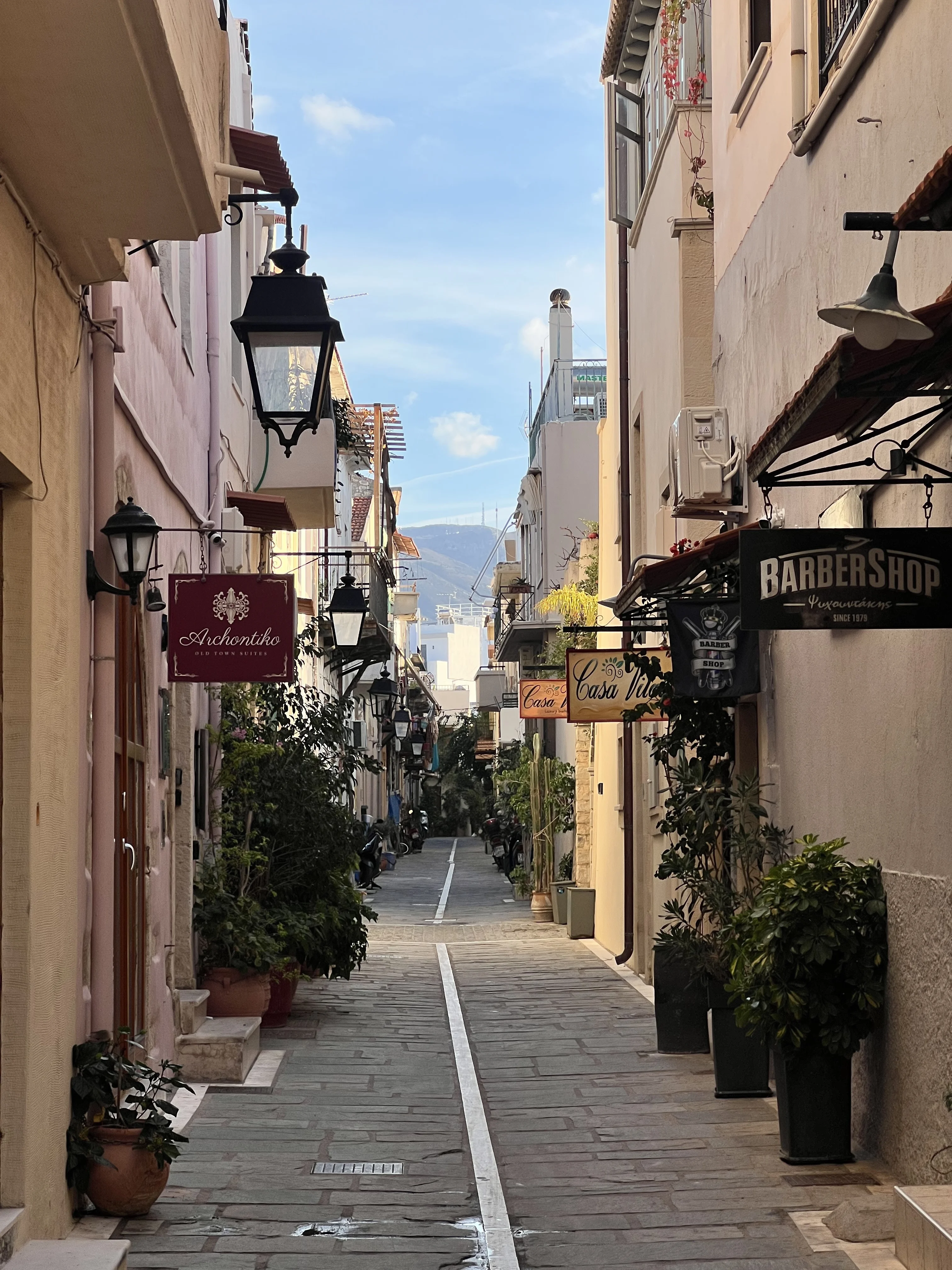
Between Heraklion’s energy and Chania’s romance lies Rethymno, a town that feels like it sits somewhere between the lively charm of Chania and the busier atmosphere of Heraklion. The old town is a beautiful maze of narrow streets where Venetian and Ottoman influences blend together. Pastel-colored buildings, wooden balconies, small cafes, and old stone archways appear around every corner. Watching over the town is the Fortezza, the large Venetian fortress perched above the sea. From the top you can see the rooftops of the town, the coastline stretching out in both directions, and the endless blue of the Mediterranean.
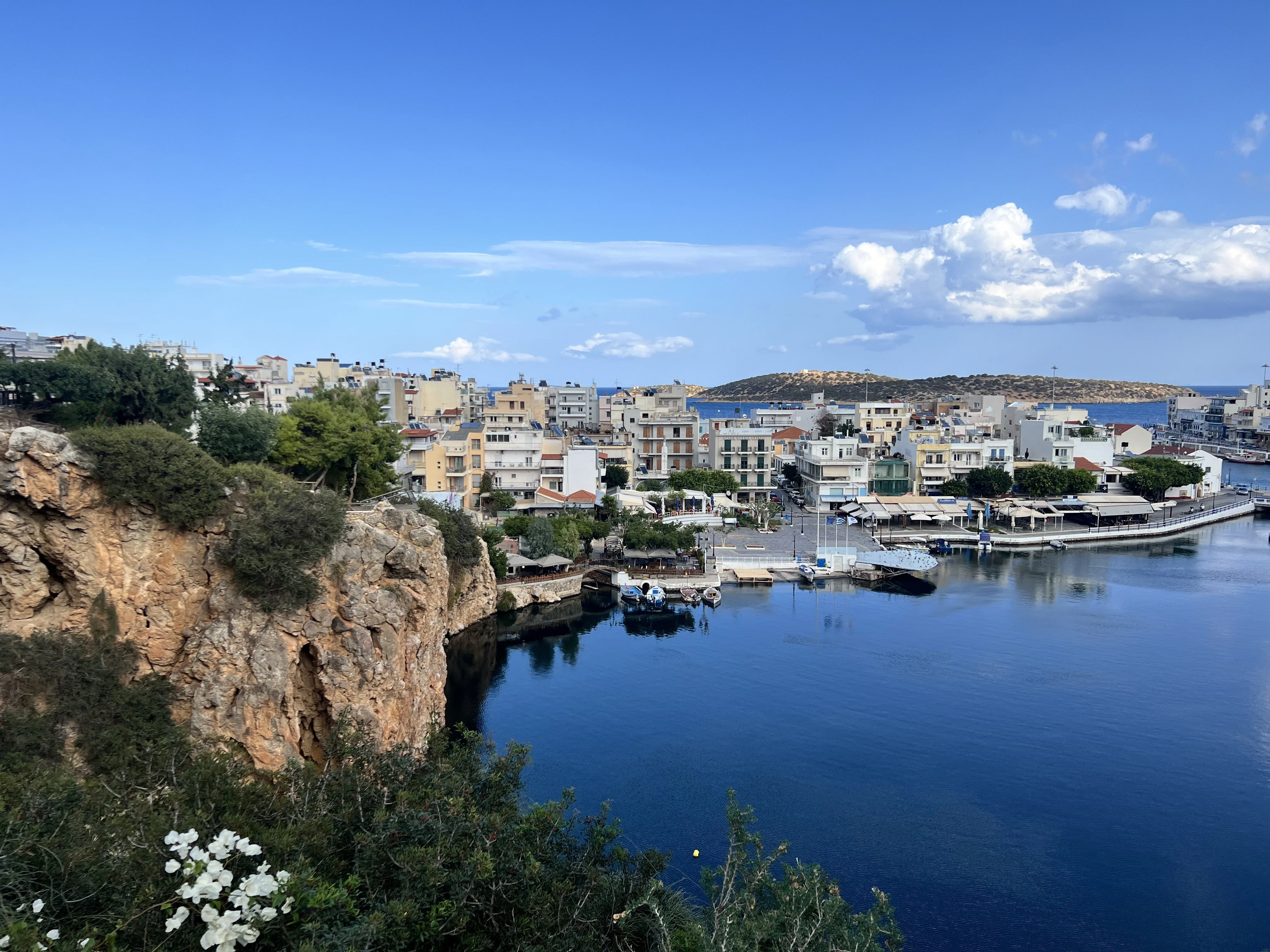
On the eastern side of the island lies Agios Nikolaos, a town with a very different atmosphere. At its center is Lake Voulismeni, a small circular lake surrounded by cafes and restaurants. The lake connects to the sea through a narrow channel, giving the whole area a calm and picturesque feel. In the evenings the lights from the surrounding buildings reflect on the water, and people gather around the waterfront to sit, talk, and enjoy the slower rhythm of the town.
I was also fortunate to have a few friends who introduced me to some of the less know parts of Crete. One of those places was Kastri, a quiet coastal village where I had one of my first real attempts at swimming in the sea. I cannot say I properly learned to swim there, but I can now at least manage to float comfortably in the water, which felt like an achievement. I also spent time hiking in Archanes, a small village surrounded by vineyards and olive groves not far from Heraklion. After the hike we ended the day at a local taverna with one of the most delicious meals I remember having on the island. Another memorable experience was visiting an olive farm near Archanes. Tasting fresh olive oil there completely changed my expectations, I genuinely do not think I can go back to using ordinary olive oil again. On another trip we went to Anogia for a short hike through the mountains. Like any other day, the day ended the best way possible: at a small taverna with incredible food and long conversations.
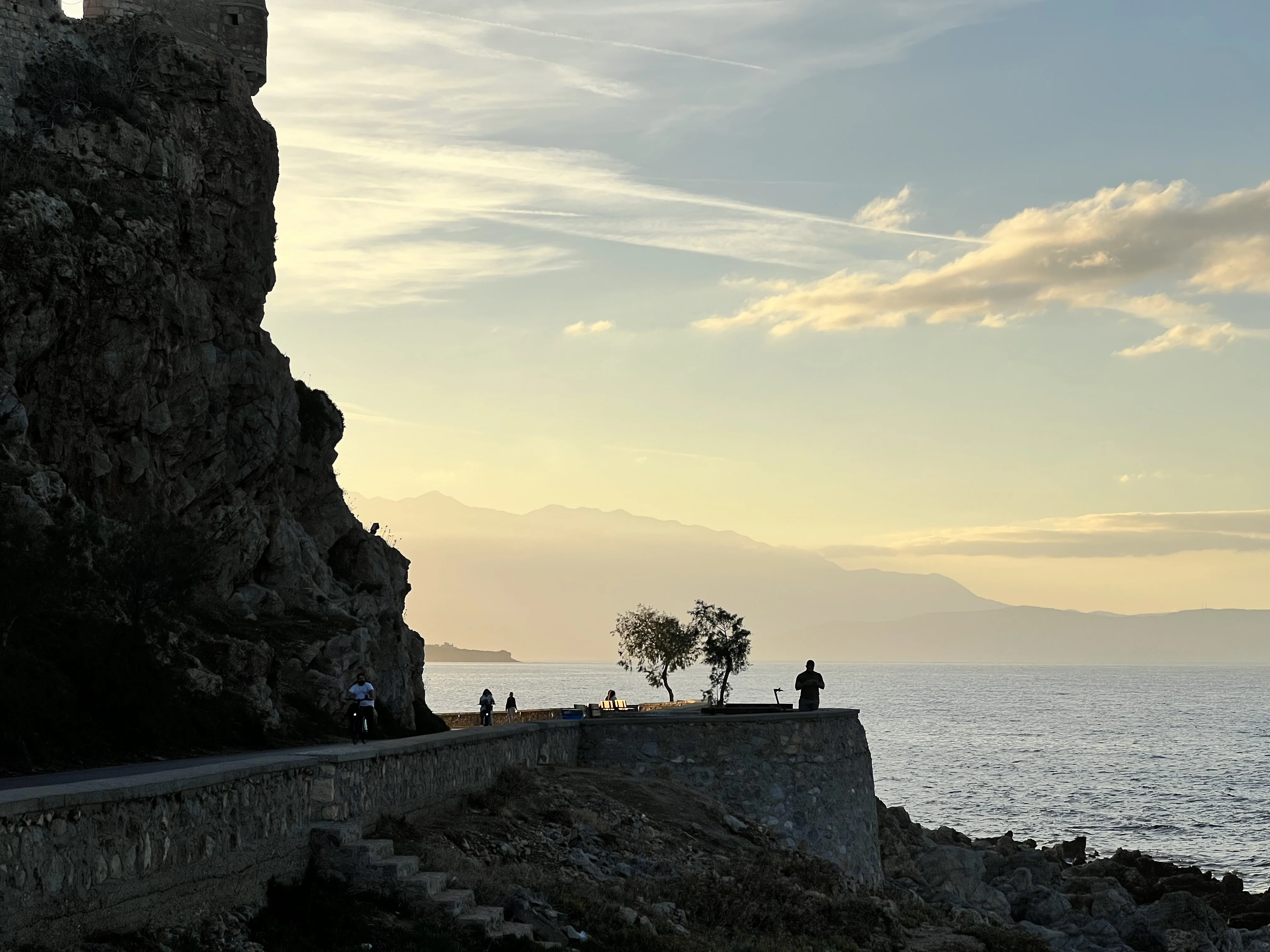
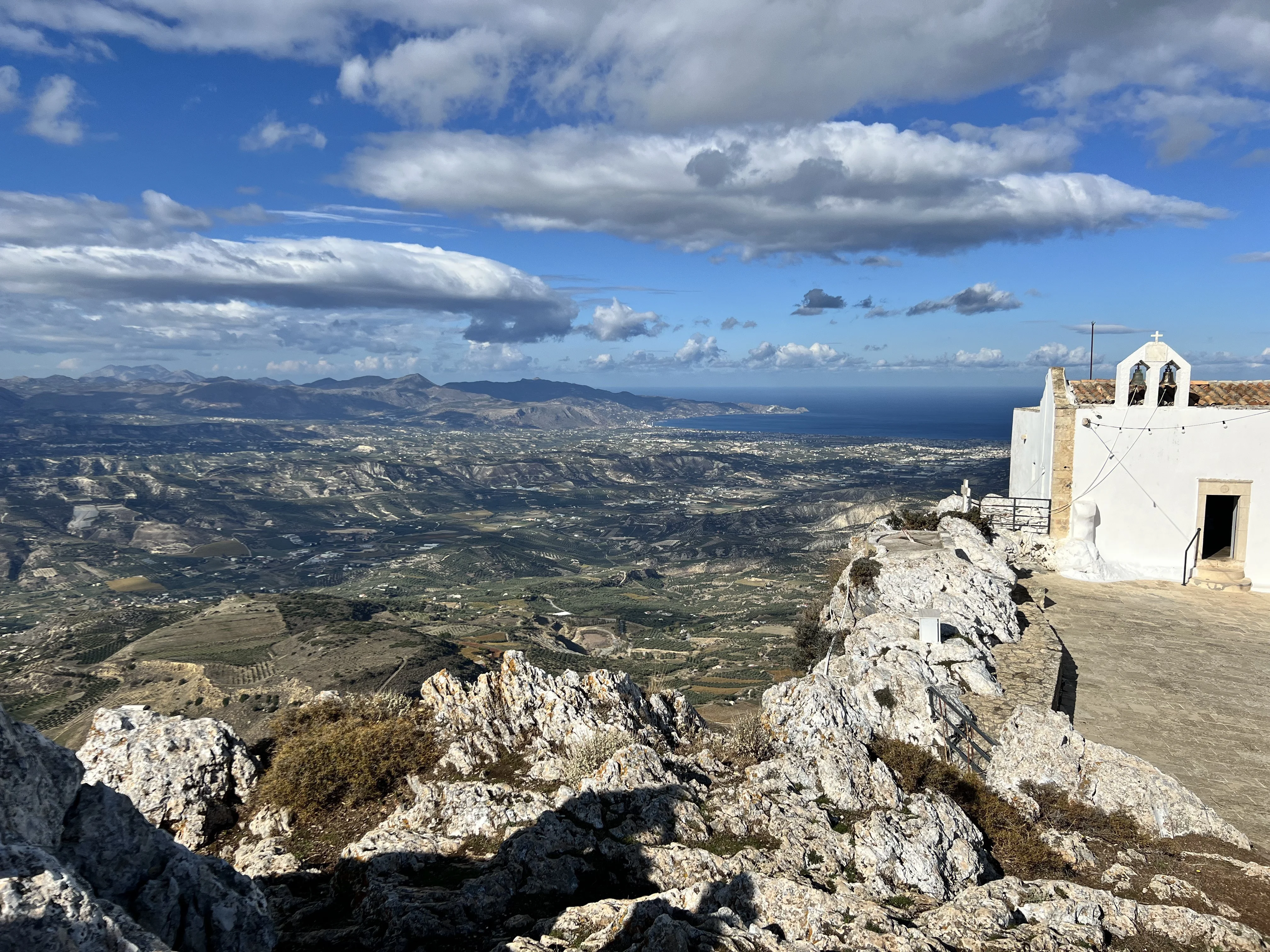
The things is, I wish I could say I now know every nook and corner of Crete- but No! There are still plenty of places I havent gotten around to exploring and that longing in me to keep going back to the warmth, the sunshine, the pretty sunsets, the bluest of the blues, the chaos, the calm in all of that chaos. And that’s the magic, Crete isn’t a place you visit and leave behind. It’s a place that gets under your skin.
It’s the warmth of the people, who treat you like family from the first hello. It’s the food that tastes like love, the sunsets that feel like a gift, the sea that calls you home. It’s the chaos and the calm, the ancient and the alive, all tangled together in a way that changes you. I went to Crete for work. I stayed for the way it made me feel alive. And if you’re looking for a place that will steal your heart and hand it back fuller- go. Just go.